MelanoMelanoMelano
Chiesa Madonna del CastellettoMadonna del Castelletto ChurchKirche Madonna del Castelletto
Brevi cenni sulla Madonna del Castelletto
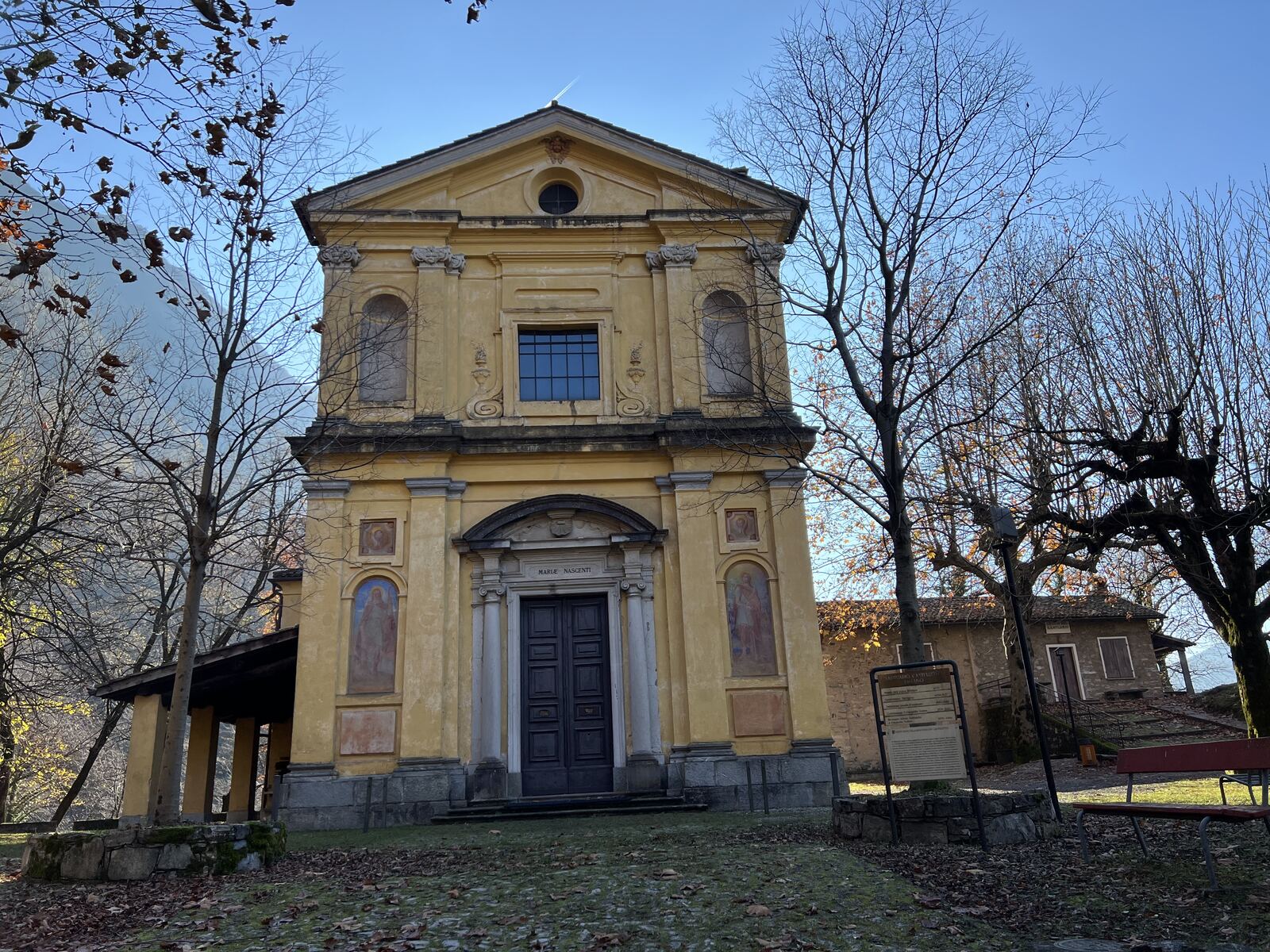
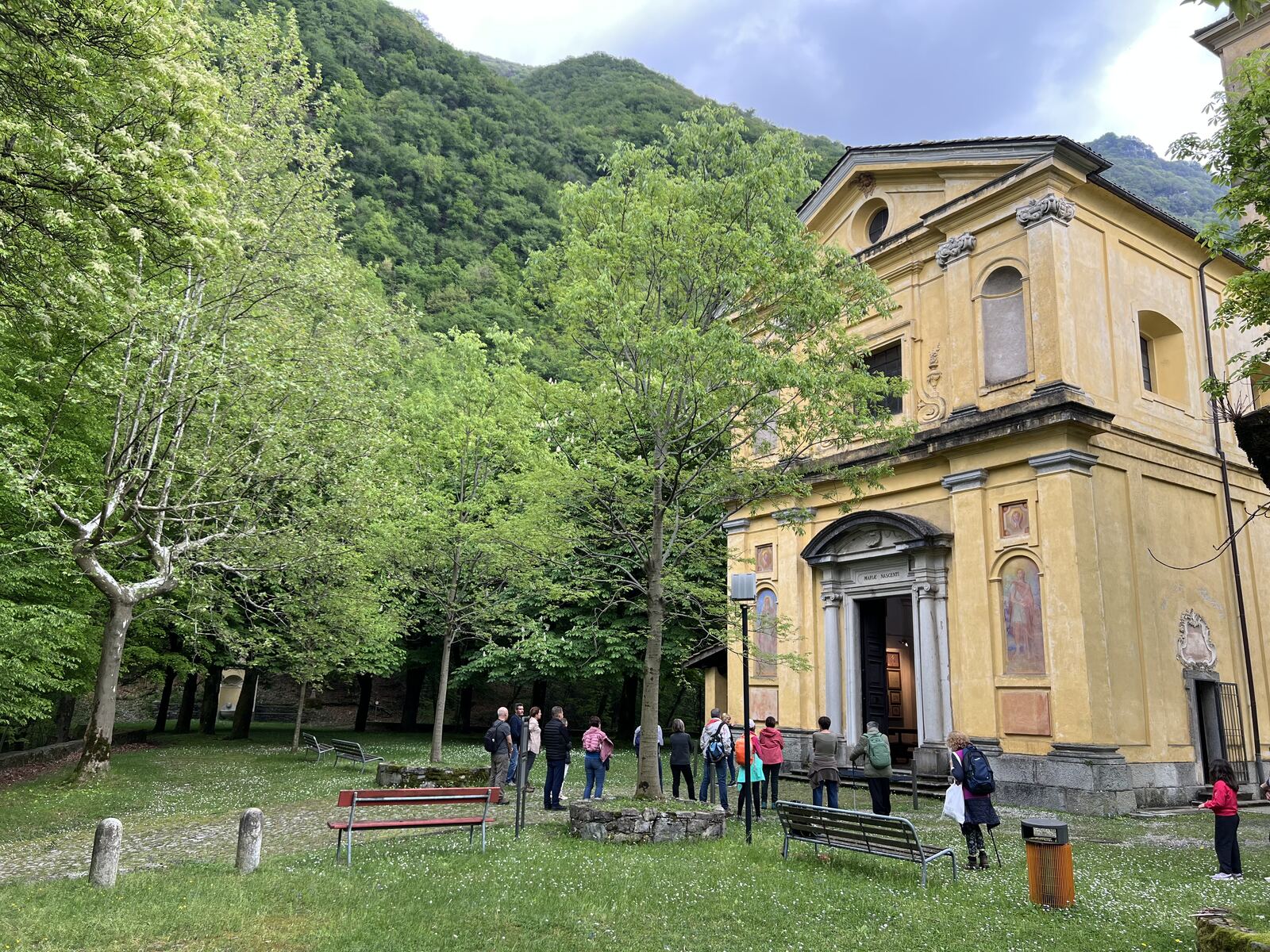
Il Santuario sorge in una suggestiva posizione sopra il lago Ceresio dove esisteva verosimilmente un edilizio fortificato medievale. La costruzione fu avviata nel 1633 in seguito al miracolo della lacrimazione della Madonna del latte, l’affresco quattrocentesco di scuola seregnese che già si trovava sull’altare di un precedente oratorio, e venne conclusa nel 1637. La rapidità di esecuzione conferì all’edificio un carattere unitario, sovvertito solo dagli interventi del pittore Antonio Rinaldi di Tremona (1816-1875), che nel 1868 dipinse i Santi Rocco e Defendente sulla facciata e una teoria di sante e di angeli all’interno dell’aula. La chiesa ha un impianto longitudinale disposto sull’asse ovest-est. La fronte su due registri sovrapposti con nicchie disposte simmetricamente una sopra l’altra, chiusa in sommità da un frontone rettilineo, risponde ai modi dell’architettura milanese della Controriforma e al principio di decoro e di semplicità auspicata da San Carlo Borromeo. Anche l’interno a nave unica con transetto poco sporgente e ampio coro si ricollega al tipo di planimetria nato in ambito controriformistico, mentre l’intero apparato decorativo mette in scena simboli volti a esaltare il culto mariano, rispondendo sia al bisogno di devozione popolare, sia a quello istituzionale della chiesa post tridentina.
Notes on Madonna del Castelletto
The Sanctuary stands in a striking position above Lake Ceresio, where there was probably a fortified medieval building. The construction was started in 1633 following the miracle of the tearing of the ‘Madonna del latte,’ the fifteenth-century fresco of the Seregnese school that was already on the altar of a previous oratory, and was completed in 1637. The speed of execution gave the building a unitary character, subverted only by the interventions of the painter Antonio Rinaldi di Tremona (1816-1875), who in 1868 painted ‘Santi Rocco e Defendente’ on the facade and a grouping of saints and angels inside the hall. The church has a longitudinal layout arranged on the west-east axis.
The frontispiece on two superimposed registers with niches arranged symmetrically one above the other, closed at the top by a rectilinear pediment, responds to the Milanese architecture of the Counter-Reformation and to the principle of decoration and simplicity desired by San Carlo Borromeo.
Also the interior with a single nave and a slightly protruding transept and a wide chancel is associated with the type of layout in Counter-Reformation, while the entire decorative apparatus features symbols aimed at enhancing the Marian cult, responding to the need for popular devotion as well as the institutional one of the post Tridentine Church (relating to an ecumenical council held by the Roman Catholic Church in Trentino, Italy, from 1545 to 1563, as a response to calls for reform and the spread of Protestantism.)
Ein kurzer Abriss zur Kirche Madonna del Castelletto
Die Kirche steht in plakativer Lage über dem Luganersee, wo sich früher wahrscheinlich einmal eine mittelalterliche Befestigungsanlage befand. Der Bau wurde 1633 infolge des Wunders der weinenden Maria lactans, dem Fresko Seregneser Schule aus dem 15. Jahrhundert, das sich bereits auf dem Altar eines früheren Oratoriums befand, begonnen und 1637 abgeschlossen. Der schnelle Bau verlieh dem Gebäude einen einheitlichen Charakter, der nur durch die Arbeiten des Malers Antonio Rinaldi aus Tremona (1816–1875) unterbrochen wurde, der 1868 die Heiligen Rochus und Defendens auf die Fassade und eine Prozession von Heiligen und Engeln im Langhaus malte. Die Kirche hat einen von West nach Ost verlaufenden länglichen Grundriss. Die aus zwei übereinanderliegenden Abschnitten bestehende Frontseite mit symmetrisch übereinander angeordneten Nischen, die an ihrer Spitze durch einen geradlinigen Frontgiebel abgeschlossen wird, entspricht den Formen der Mailänder Architektur der Gegenreformation und dem Prinzip der Würde und der gewünschten Einfachheit von San Carlo Borromeo. Auch der Innenraum mit nur einem Schiff und wenig ausgeprägtem Querschiff und einem grossen Chor entspricht dem während der Gegenreformation entstandenen Grundriss, wohingegen sämtliche Verzierungen Symbole in Szene setzen, die den Marienkult verherrlichen. Somit reagierte man auf den Andachtsbedarf des Volkes als auch auf den institutionellen Bedarf der posttridentischen Kirche.