MelanoMelanoMelano
Portico PolattaPolatta PorticoPortico Polatta
Il portico Polatta (ora Canavesi), un segno dell’emigrazione
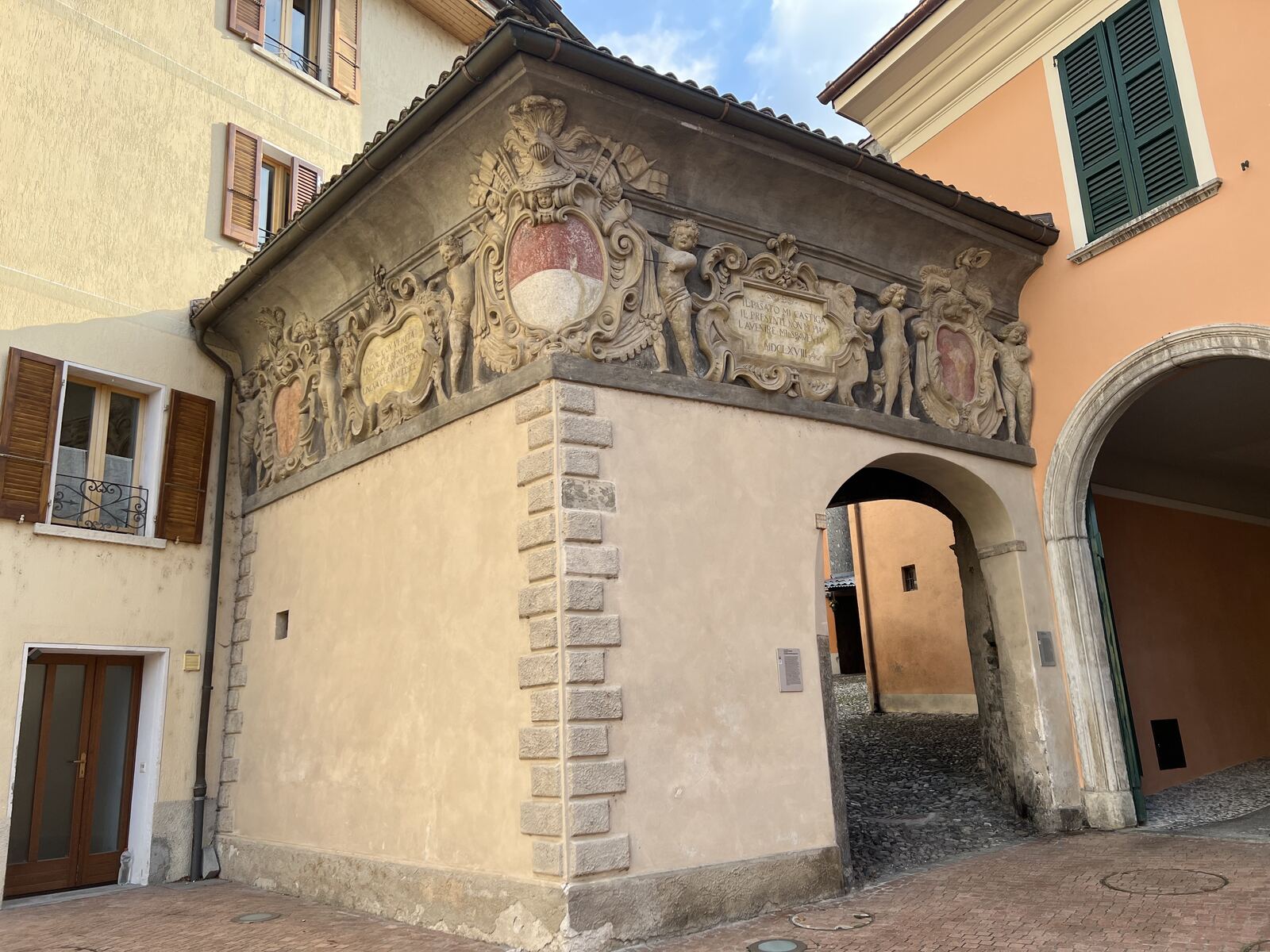
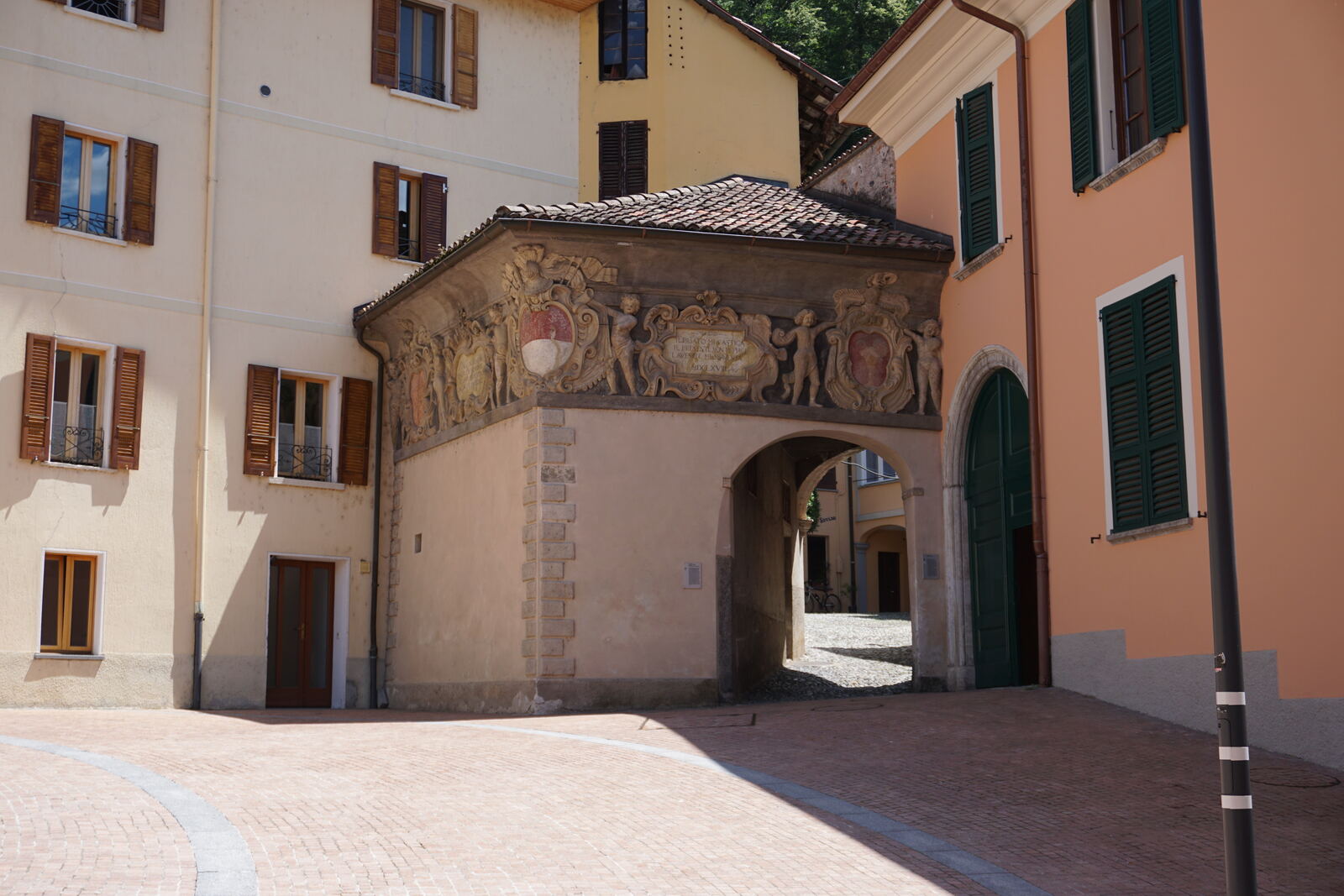
Il portico che introduce alla corte, su cui prospettano le case un tempo appartenute alla famiglia Polatta, è una mole cubica di notevole effetto scenografico con un arco tagliato di sbieco, bugne nelle zone angolari e un ampio fregio di putti, scudi araldici e targhe con iscrizioni che corrono sotto la grondaia. L’elegante e imponente costruzione ricorda nella sua costruzione massiccia e nel suo apparato decorativo le porte cittadine e la loro valenza reale e ideale di difesa, separazione e nel contempo di comunicazione. La raffinata ricerca estetica dell’ingresso riflette una chiara esperienza urbana e un evidente intento di autorappresentazione del committente: Francesco Polatta, architetto e ingegnere militare, che eresse questo portale lasciando lo stemma del proprio casato sopra l’arco del portale. Accanto all’emblema araldico è posto un cartiglio con la data 1668 e l’epigramma: «Il passato mi castiga / Il presente non mi piace / l’avvenire mi spaventa». Sul lato settentrionale si legge invece: «Con verità lingua che benedice / con menzogna lingua che maledice». Nel loro messaggio sconsolato queste iscrizioni traducono l’orrore e lo smarrimento di un uomo d’arme vissuto in un mondo insidioso, al centro di conflitti politici e religiosi, nonché di epidemie di peste e carestie che scossero l’Europa del Seicento.
The Polatta portico (now Canavesi) - a sign of emigration
The portico that leads to the courtyard and the houses around it once belonged to the Polatta family, is a large and impressive cube with a bias-cut arch, ‘bugne’ stones (projecting outward from the building to be later carved into decorative mouldings, coats of arms etc.) in the corner areas and a wide frieze of cherubs, heraldic shields and plates with inscriptions that run under the eaves.
The elegant and imposing build reminds us of the city gates in its massive construction and decorative apparatus and their real and ideal values of defense, separation and at the same time of communication.
The refined aesthetic work at the entrance reflects a clear urban experience and an evident intent of self-representation of the client - Francesco Polatta, architect and military engineer who erected this portal, leaving the coat of arms of his family over the portal arch.
Next to the heraldic emblem there is a cartouche (a carved tablet or drawing representing a scroll with rolled-up ends) with the date 1668 and the epigram ‘The past punishes me. I do not like the present. The future scares me.’ On the northern side we read - ‘With truth, language blesses. With lies, language curses.’ In their disconsolate message these inscriptions translate the horror and the loss of a man of arms living in an insidious world, at the centre of political and religious conflicts, as well as epidemics of plague and famine that shook seventeenth century Europe.
Der Bogengang Polatta
(heute Canavesi)
Ein Zeichen der Emigration
Der Bogengang, der zum Hof führt, an dem sich die damals der Familie Polatta gehörenden Häuser aneinanderreihen, ist ein kubisches Bauwerk mit beachtlicher theatralischer Wirkung, abgeschrägtem Bogen, Bossen in den Ecken und einem grossen Fries mit Putten, Wappenschilden und Plaketten mit Inschriften unter der Dachtraufe. Das elegante und eindrucksvolle Bauwerk erinnert mit seiner Massivbauweise und seiner Verzierung an die Stadttore und ihren realen und idealen Wert für die Verteidigung, Trennung und gleichzeitig auch Verbindung. Die raffinierte Suche nach Ästhetik spiegelt in dem Eingang eine klare städtische Erfahrung und eine offensichtliche Absicht der Selbstdarstellung des Auftraggebers wider: Francesco Polatta, Architekt und Militäringenieur, der dieses Portal errichtete und das Wappen des eigenen Hauses über dem Portalbogen anbrachte. Neben dem heraldischen Symbol befindet sich eine Schriftrolle mit der Jahreszahl 1668 und dem Epigramm: „Il passato mi castiga / Il presente non mi piace / l’avvenire mi spaventa“ (Die Vergangenheit straft mich / Die Gegenwart gefällt mir nicht / Die Zukunft bereitet mir Angst). Auf der Nordseite ist hingegen zu lesen: „Con verità lingua che benedice / con menzogna lingua che maledice“ (Wer die Wahrheit spricht sei gesegnet / Wer mit Lüge spricht sei verdammt). In ihrer trostlosen Botschaft vermitteln diese Inschriften die Angst und die Verwirrung eines Soldaten, der in einer heimtückischen Welt inmitten von politischen und religiösen Konflikten sowie von Pestepidemien und Hungersnöten gelebt hat, die das Europa des 17. Jahrhunderts heimgesucht haben.